Thursday, February 7, 2013

Red Skelton: The Tears of a Clown

Red Skelton in his famous skit as Freddie the Freeloader

Red Skelton was a popular comedian and clown who performed in circuses, on Vaudeville and Broadway, and on radio, television and film. He was also a talented writer, composer and artist. His career spanned from the 1930s to the 1970s and he was well-loved by his many fans, but his personal life was marred by tragedy.
Early Years
Red Skelton, was appropriately named for his bright red hair. He was born in Vincennes, Indiana on July 18, 1913 (his birth year is often disputed) to Joseph and Ida Skelton. His father was a former clown with the Hagenbeck & Wallace Circus. Joseph Skelton left the circus to work as a grocer, but he died before Red was born. Ida Skelton suddenly found herself alone with four young boys. According to Skelton's biography on Clown Ministry, Skelton's mother worked hard as a cleaning woman and elevator operator to support her family, but she somehow managed to buy tickets to Vaudeville for her children once in awhile to remind them of their father. Skelton did his share to support the family, as well, selling newspapers on the street corner in front of the Pantheon Theatre in Vincennes. It was there that he met comedian Ed Wynn who purchased every newspaper Skelton had in his arms then invited the boy to his show. Wynn took Skelton backstage and introduced him to the thrills of performing before a live audience.
A Fifteen Year Old Clown
When Skelton was ten a traveling medicine show came to town and allowed him to join in on their performances. When he was fifteen, Skelton followed the dream of every young man in that period in American history--he left home to join the circus. Over the next two years, he found work in minstrel shows, performing on show boats, burlesque shows, Vaudeville, and in the same circus where his father once performed, the Hagenbeck & Wallace.
The Red Skelton Show
In 1937, Skelton debuted on both Broadway and radio, and in 1938 made the first of forty movies he would make for MGM over the next ten years with "Having a Wonderful Time." The Red Skelton Radio Show ran from 1941 to 1953 and was a great success. During this time, Skelton developed some of his most well-known and beloved characters, such as Gertrude and Heathcliffe, the cross-eyed seagulls. He interviewed many famous guests on the show, including Ed Sullivan.
The Move to Television
In 1951, Red Skelton moved to television and brought with him one of his most popular characters, Freddy the Freeloader, a tramp clown, who was so popular he may have helped the show win an Emmy in 1953. That same year, The Red Skelton Show was moved from NBC to CBS where Skelton ended each show with his trademark line, "Good night and God bless." The show was canceled by CBS in 1970 due to rising production costs. It was picked up again by NBC that same year, but never regained its former popularity and Skelton returned to live performances.
Skelton's Paintings and Other Creative Talents
Red Skelton was also a talented painter and his favorite subject was clowns. According to Clown Ministry, Skelton once estimated that he made over two million dollars per year from lithographs of his clown paintings. In his later years, he wrote poetry and one short story every day. He was also a music composer.
Tragedy at Home
Skelton met his first wife, Edna Marie Stillwell, while performing in Kansas City in 1930. They married in 1931. She was his manager and writer and continued to work as his chief writer after their divorce in 1944. Skelton married Georgia Maurine Davis in 1945. They had two children, Richie and Valentina. Richie died of leukemia in 1958. Georgia and Red Skelton divorced in 1971. Georgia committed suicide on the anniversary of her son's death in 1976. Skelton was devastated and refused to perform for ten years while he mourned his loss. Instead, he spent his time painting clowns. His paintings were both popular and profitable. In 1973, he married Lothian Toland and they remained married until Skelton's death.
Red Skelton's Pledge of Allegiance
In his weekly television show in 1969, during a time of public arguments regarding required prayer and Bible reading in public schools, Skelton recited one of his most popular monologues on the Pledge of Allegiance. He carefully dissected the Pledge, commenting on the meaning of each section, prophetically adding "Since I was a small boy, two states have been added to our country, and two words have been added to the Pledge of Allegiance: 'Under God.' Wouldn't it be a pity if someone said that is a prayer and that would be eliminated from schools, too?" The words "under God" were added to the Pledge of Allegiance in 1954. Skelton's monologue has recently resurfaced in email chain letters and social networking programs.
Red Skelton's Legacy
As one of the great highlights of his career, in 1980, Red Skelton performed at Carnegie Hall. He was awarded the Governor's Award of the Academy of Television Arts and Sciences during the Emmy Awards Show in 1986. He starred in 55 films in his lifetime. He died on September 17, 1997. The 16 million dollar, 850 seat Red Skelton Performing Arts Center was built on the Vincennes University campus in Indiana in 2006.The Red Skelton Gallery and Education Center will showcase a three million dollar collection of Skelton memorabilia. Red Skelton also founded what is now the Red Skelton Museum & Education Foundation for needy children.
Sources:

  • "Biography." Red Skelton Official Website. Retrieved July 20, 2010.
  • "Biography of Red Skelton." Clown Ministry. Retrieved July 20, 2010.
  • "Red Skelton Biography." The Red Skelton Museum & Education Foundation Website. Retrieved July 20, 2010.

Thursday, July 12, 2012

Ma Kettle's Romantic Ghost: The Haunting of Marjorie Main


It’s not often that we find a person who is able to gracefully accept the constant criticism of a loved one, and even more rare to find someone who will accept the fact that they are being haunted. Oscar-nominated American actress Marjorie Main of Ma Kettle fame accepted both, and she expected those around her to do the same, to accept the fact that she was haunted by the ghost of her dead husband, Dr. Stanley Krebs. 

Marjorie Main was a preacher’s daughter and Indiana Hoosier. She was born in Acton, Indiana in 1890 and named Marybelle Tomlinson.  She changed her name to protect her father’s reputation when she made her debut in Vaudeville.  Her father, the Reverend Samuel Tomlinson, did not approve of stage performances, but his daughter was fascinated by acting since childhood. 

As Marjorie Main, Tomlinson made 40 movies, including 10 in the Ma and Pa Kettle series alongside actor Percy Kilbride who starred as "Pa." In 1945, Main was nominated for the Best Supporting Actress Oscar for her performance as the mother of fifteen children in The Egg and I. Her role in the film and her performance was so popular that billboards prominently displayed her photo, alongside Kilbride, while the two main characters, played by Fred MacMurray and Claudette Colbert, were presented as thumbnail shots.   
 
Marjorie Main married a former preacher, like her father. Dr. Stanley LeFevre Krebs also had a doctorate in psychology and was a great deal older than Main, but she adored him. The two were married on December 2, 1921, and Main took a short break from the movies to perform her true-life role as a housewife. When she returned to the movies, her performances were carefully watched by Krebs who often offered his advice on how she could improve. Their marriage only lasted fourteen years, ending with Krebs’ death in 1935, and Main never remarried.  

She did, however, return to acting, with a vengeance. She often starred or appeared in as many as five films a year. In addition to her role in The Egg and I, Main appeared in some of my favorite classic films, such as 1939's The Women, and The Long, Long Trailer, filmed in 1953 starring Lucille Ball and Desi Arnaz. Main generally played the role of a mother with many children, which highlighted her remarkable acting talents considering she never had any children of her own.

In spite of this fact, Main had a reputation for working well with children, though even the children noticed Main's quirky conversations with Krebs. Main appeared with Oscar winner Margaret O'Brien in the MGM Western Bad Bascomb in 1946. In a two-part interview with Allan R. Ellenberger for Movieland Magazine, O'Brien described Main as "fun" and "nice." During the interview, O'Brien also explained that when the cast would return from filming and gather in a log cabin for dinner, Main would "set a place for her dead husband and talk to him at the table."

O'Brien was not the only Hollywood actress who noticed Main's conversations with her deceased husband. In fact, her conversations were hard to ignore. During filming, Main often stopped in the middle of a performance to consult with Krebs. She would pause during filming, raise her hand, ask Krebs questions and a few seconds later appear to be answering questions presumably posed by her deceased husband.  She always displayed a casual acceptance of these rather extraordinary conversations with the ghost of Dr. Krebs during filming and her acceptance of this unique lifestyle--as well as her remarkable talent--caused those around her to adapt to her situation, as well.  

When she was done speaking with her deceased husband, Marjorie Main would signal to the director that he could continue and, as it must, the show would go on...

Sunday, June 3, 2012

Sweet Shirley Temple: A Tribute to one of my Favorite Childhood Actors

Shirley Temple, Trailer Screenshot, The Little Princess, 1939.


Shirley Temple, with her bouncy curls, skip-happy dancing and cherubic voice, captured the hearts of Americans for years. For those of us born in the post WWII Baby Boom years (1946-1964) this tiny angel of the silver screen is unforgettable. Her name alone can evoke memories of our own childhood, sitting in the dark theater, dreaming that some day we, too, might have the chance to sing and dance in front of the camera.

A Charmed Life 

Shirley Temple did seem to live a charmed life. According to her autobiography Child Star: An Autobiography, she was born Shirley Jane Temple (later, Shirley Temple Black) on April 23, 1928 to George and Gertrude Temple, who already had two older children. Shirley had two older brothers, and her role as the sweet little baby of the family certainly helped stimulate her outgoing personality.

Temple was three years old when she started professional dance training at Mrs. Meglin's Dance Studio in Los Angeles. Her mother decided to style her hair in the golden ringlets made popular by silent film star Mary Pickford--a wise choice as she was quickly spotted by Jack Hays and Charles Lamont of the Educational Films Corporation. The men were looking for sweet-faced angels for a series of short films called Baby Burlesks--parodies of adult films made with child actors.

Temple was their star. She was paid $10 a day for that dimple-faced smile, a large amount of money at that time. (These early films are available through the Official Shirley Temple Website.) She also starred in two-reel films called Frolics of Youth. Shirley and the other child actors at Educational Pictures performed in commercials and modeled for advertisements to try to keep the company going, but eventually, Educational Pictures filed for bankruptcy.


"On the Good Ship Lollipop"

Temple then appeared in various bit parts in films made by Warner Bros., Paramount and Universal Pictures. Her first big role was in the 1934 Fox Films production Stand Up and Cheer! and her salary was raised to $1250 a week. That same year, she made Little Miss Marker and Bright Eyes, which introduced her famous song "On the Good Ship Lollipop," a song my sisters and I memorized and sang constantly, as did many children of that era. In 1935 she was the first child star to win a Juvenile Oscar and had her hand and footprints embedded in the sidewalk in front of Grauman's Chinese Theatre.

When Fox merged with Twentieth Century in 1934, Producer Darryl F. Zanuck convinced Shirley's family to commit her to four films a year. Her next films were blockbusters, and my favorites: The Little Colonel, which I loved, Our Little Girl, Curly Top, and The Littlest Rebel--the last two films were the top box office draws for 1935. My other two favorite Shirley Temple films were Heidi, made in 1937, and A Little Princess, made the following year, both major tearjerkers. A Little Princess is by far my favorite, so much so that I do not believe it should have been remade.


Scandal

Unfortunately, like most child actors, Shirley Temple had a scandal. In 1937 she starred in John Ford's Wee Willie Winkie and Graham Greene shocked the world with his review, calling Temple a "Totsy," and claiming her body was too "nubile for a nine year old." The family sued for libel and won. The lawsuit money was held in trust until Temple turned 21. At that time, Temple gave permission for the money to be used to build a youth center in England.

Shirley Temple's image was used on many products, such as clothing, dishes, and dolls, and she made more money from these products than she did in her films. In addition to the products made in her name and image, Shirley Temple has the special distinction of being the image used for a sweet, nonalcoholic drink. The Shirley Temple, invented in the 1930s by a bartender at Chasen's in Beverley Hills (note: this origin is disputed) is a mix of ginger ale with a splash of grenadine and a maraschino cherry garnish. Lemon-lime soda is now used in lieu of ginger ale, but that soft drink was invented much later.

Personal Life


As she grew older and her career waned in her teenage years, she still lived quite well off the money from her films and merchandise royalties. In spite of the slump in her acting career, Shirley Temple did not age "awkwardly," as so many child actors do. She was a remarkably beautiful young woman. When she was 15, she met Army Corps Sergeant, John George Agar, and they were married two years later. Their daughter, Linda Susan, was born in 1948. Temple and Agar made two films together, including RKO's Fort Apache, but their married life was deeply troubled. The couple finally divorced in 1950 and Temple retained custody of their daughter.

The year she divorced Agar, Temple also met WWII US Navy hero Charles Alden Black. The couple met in January and were married in December at his parent's home. At that time, Black was reportedly one of the richest men in California--not that Shirley Temple needed any sort of financial boost--she was a successful career woman in her own right.

Shirley and Charles have two children together: Charles Alden Black, Jr., who was born in 1952, and Lori Black, who was born in 1954. Charles Alden Black, Sr. was recalled to serve in the Navy during the Korean War, but returned home safely. He later became the Director of Operations for Stanford Research Institute. After 54 years of marriage to Shirley Temple Black, Charles Alden Black died in 2005 at their California home from a bone marrow disease.

In 1958, Shirley Temple Black hosted an NBC anthology series called Shirley Temple's Storybook, sixteen hour long fairy tales. She also made numerous guest appearances on television talk shows. The show's popularity spurred the re-release of the Shirley Temple doll, clothing line and coloring books.

Politics

In addition to being a very public person, Shirley Temple Black has also been a politically-active woman through the years. She made one of her first political appearances in England when she was 16 years old when she attended a ceremony on Ottawa, Canada to raise money for Canadian Victory Bonds. In 1967, Temple decided to run for the US House of Representatives, but lost to Pete McCloskey. She was appointed Representative to the 24th United Nations General Assembly in 1969.

In 1972, Shirley Temple Black was diagnosed with breast cancer and had a modified radical 
mastectomy. Remarkably, breast cancer was not often openly discussed at that time in spite of the active women's movement. Shirley Temple Black was one of the first celebrities to speak openly about breast cancer, her experiences, and the need for research. Temple discussed her experiences on radio, television, and in magazine interviews.

Shirley Temple Black was appointed to the position of US Ambassador to Ghana in 1974, a position she held for two years. She was then appointed as the first female Chief of Protocol of the US in 1976 when she oversaw the arrangements for President Carter's inauguration and inaugural ball. She also served as US Ambassador to Czechoslovakia from 1989 to 1992.

Shirley Temple Black has also served on the Boards of Directors of numerous large corporations, including The Walt Disney Corporation, Bank of America, UNESCO, the United Nations Association and the National Wildlife Federation.

In 2005, Shirley Temple Black received a Lifetime Achievement Award from the Screen Actor's Guild, recognition that was well-deserved for a woman who started her career at three-years old. Her acceptance speech was as fun and light as the way she has lived her life. As she accepted the award, with her usual charming smile on her face, she said, "I have one piece of advice for those of you who want to receive the Lifetime Achievement Award: Start early!"

Wednesday, December 7, 2011

Arizona Raiders

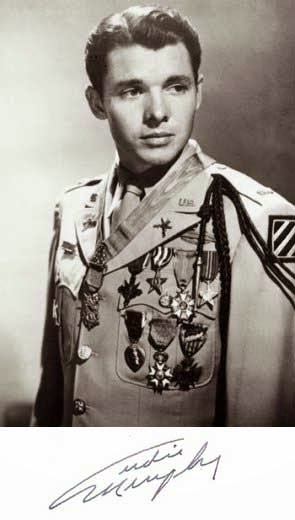
Arizona Raiders stars Audie Murphy, the most decorated soldier in World War II.


Arizona Raiders, a post-Civil War story of two men who join the Arizona Rangers to hunt down those members of Quantrill's Raiders, who are still at large after breaking up into smaller groups to continue their murderous raids.

Arizona Raiders was filmed in Arizona in 1965. It stars Audie Murphy--one of the most decorated heroes in World War II--when Murphy was approximately 17 years into his acting career. In his earlier films, even To Hell and Back, the true story of his experiences in World War II, Murphy seems inexperienced as an actor, unsure of his abilities. In Arizona Raiders he shows a maturity that is impressive.

Maturity is one thing, emotion is quite another. Murphy's performance in this films, as in most of his films, lacks the emotional connection that allows viewers to suspend their disbelief. When Murphy's brother dies in his arms, he shows no emotion in his face, body, or voice. He immediately seeks revenge on his brother's killers, men who trusted that Murphy was part of their outlaw gang, but Murphy still shows no emotion.

I think one of the reasons I feel so compelled to watch Audie Murphy's performances, even when he does show little emotion, is because of his public admittance that he suffered from Post Traumatic Stress Disorder. In fact, he was one of the first public figures to fight against the prejudices attached to soldiers with PTSD. When I watch this film, I wonder if his lack of emotion in his acting performance is due to his PTSD--perhaps he was afraid that if he allowed himself to relate to the character's situation for the film, he might lose control.

One of the unique aspects of this film is the outstanding monologue at the beginning of the movie by the Ohio Gazette editor, played by Booth Colman. Colman's speech is passionate and convincing. His eyes flash with anger as he recounts Quantrill's ride of terror through Lawrence, Kansas. Colman's talent has served him well through the years with appearances on a wide variety of television shows, from Death Valley Days and Cheyenne, to Frasier.

This film also stars Ben Cooper as Murphy's best friend, Willie Martin. Cooper had a long television career, as well, with appearances in shows such as Rawhide and Gunsmoke. He was also in the cult film Johnny Guitar, appearing as Turkey Ralston. The Western, Johnny Guitar, starred Joan Crawford and Mercedes McCambridge in a feud that likely inspired the cliched-phrase "cat fight." It is best remembered as a film where every actor, including Ben Cooper, overplayed his or her role to such extremes that film-goers are sometimes confused about whether they should laugh out loud or cling to the edge of their seats.

In Arizona Raiders, though, Cooper is cool, collected, and competes with Colman for the best performance in the film.

I recommend Arizona Raiders--entertainment with a bit of history, effectively capturing the tension and drama of post Civil-War America.

Sunday, August 21, 2011

Santa Fe Trail: Guest Blogger Gregory Hasman

As a special treat we have a guest blog from Gregory Hasman, author of the blog Ramblings From a Road-a-Holic, who reviewed the 1940 Western film Santa Fe Trail, starring Errol Flynn and Olivia de Havilland.

The 19th Century saw the proliferation of Americans out West. They traveled via railroad and overland trails, one of which was the famous Santa Fe Trail. In 1941, Errol Flynn and future president Ronald Reagan were part of an all-star cast, who took their talents across the trail called, drum roll please, The Santa Fe Trail.

While the movie began along the Santa Fe Trail, it more or less used the title as a motif to describe the triumphs and failures that come along with a journey. Flynn as J.E. B. Stuart, and Raymond Massey as John Brown, delievered the two most memorable performances, although the acting throughout was outstanding.

The story took place during the tumultuous year of 1854. It was a time marked by secular tension. In the South, people wanted to preserve and even expand the “peculiar institution” known as slavery. While the North had two different goals in mind: one group known as the Free-Soilers wanted to expand west without slavery, but did not care whether slavery ended or not. Another sector known as abolitionists wanted to destroy the system of slavery forever. The film explores these different tenets very well.

The year 1854 began with the Kansas-Nebraska Act, which should have created popular sovereignty among the citizens. Many thought this was a travesty because it violated the Missouri Compromise of 1820, where anything about the 36 degree 30 foot line in Missouri would be a free state. This conflict became the catalyst in the bitter Border Wars between Missouri and Kansas. Additionally, it helped bring about John Brown, a staunch abolitionist. Brown’s goal was to annihilate slavery and those who were for it in any way. He brought his sons and supporters across the land in hopes to create a resurrection.

In the film, Flynn plays future Confederate General J.E.B. Stuart. Stuart, along with fellow West Point classmate George Custer (Ronald Reagan) are among the graduates whose first mission is to protect the settlers from the American Indians. When they get to Independence, Missouri, however, they find they have another group to contain, Brown and his men.

Meanwhile, in Missouri, both Stuart and Custer encountered a charming young lady named “Kit Carson” Holliday (Olivia de Havilland) who suits both men's fancies. However, while Stuart is charming, and Custer attempts to be, there is no time to court the beautiful young lady as they have a mission to accomplish.

Along the way, the men encounter Brown’s sons who are afraid of their persistent father, a man who feels he has a calling from God to rid the country of slavery. After being injured, one of Brown's sons notifies Stuart back in Missouri of his father’s whereabouts.

Another interesting side plot features one of Brown’s men, known as Rader (Van Heflin). While at West Point he extolled the virtues of the anti-slavery cause, which stirred trouble among the Southern cadets, including the Virginian, Stuart. He later joins with Brown to promote his values, philosophical and economical. After each venture, however, he grows more incessant of receiving payment for his services. This leads to Brown’s downfall, and his eventual capture at Harper's Ferry in Virginia.

After Brown destroys the Kansas town of Pottawatomie, Stuart, Custer, and the Army go after him with all they have. They again meet with Miss Holliday. At a formal party in the Nation’s capital, Holliday introduces Stuart to two people who will play huge roles in the war in a few years--General Robert E. Lee (Moroni Olsen) and Secretary of War Jefferson Davis (Erville Alderson). While Stuart is impressed, he still wants Holliday, and eventually succeeds in wooing and he gets her. The disappointed Custer winds up talking to the daughter of Secretary Davis without knowing who she is. After a dance, she introduces him to her uncle and his wild-eyed expression says it all. Not a bad consolation prize for Custer.

As mentioned, Rader turns on Brown. As an old adversary, while he disagrees with Stuart, he nevertheless walks onto the dance floor and tells Stuart, as one fellow West Point cadet to another, about Brown’s plan to gather weapons at the armory in Harper’s Ferry and arm slaves. This enables Lee to send troops to the Ferry and capture Brown, who surrenders and is hung.

Some have viewed the movie as a favorable portrait of the South. However, it portrays Brown as a man on a mission, and while he does enact extreme measures, he also delivers a beautiful soliloquy about the moral forecast of the nation.

All in all, the movie is well acted and historically accurate, providing an intriguing look into the events that led up to the capture and execution of John Brown.

Santa Fe Trail. 1940. Dir. Michael Curtiz. Perf. Errol Flynn, Olivia de Havilland, Raymond Massey, Ronald Reagan. Warner Bros. Running time: 110 min.

Thank you, Greg, for this wonderful assessment of an Old West favorite, and thank you for guest-blogging on Classic Films! Hope you come back! Darla Sue